Free trade, Business domains, Coping with
the unexpected, Demanding customers, Subtly differentiated product, Flattening
organisations, Scope, Processes, Competence (know how), Effective supply can
create demand (Say's Law)
free trade has become more prevalent across Europe and even in the world due to the easing of government restrictions as they believe that free trade is good trade. Globalistaion has helped businesses in many different domains to grow and to spread their businesses around the world. The constumers now can demand what they want by ordering what they want when they want and if a lot of people want whatever it is, people will make the producers make more or variants on it. Flattening organizations are more common because it is easy to start up and online business and then ship to the world.
Tuesday, 31 March 2015

Declining Influence
Declining Influence
National borders, Product markets, Planning,
Uninformed customers, Standard product, Hierarchy, Scale, Procedures,
Information (know what), "The market is always right."
The things are above are the things considered by this source that are becoming less important due to the evolution of globalisation. National borders are being broken down by the ease that people can travel to other countries as well as the fact that people can communicate online. Markets are less important as you as a consumer will have a wealth of choice where to order your goods from. Planning for markets become less important as well because seasonal gifts can be bought all year round, further leading to lack of importance on the other quote above "The market is always right." Scale is less important as the producer can now source the cheapest option for the material needed to make the product. so where as you would need to make more in the past to make it cheaper, that is no longer the case.
Monday, 30 March 2015
Published References
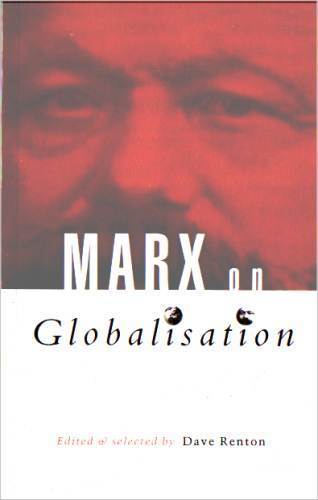
Renton, D. (ed.) (2001) Marx on Globalisation. London: Lawrence and Wishart Limited.

Rubin, J. (2009) Why Your World Is About To Get A Whole Lot Smaller: Oil and the End of Globalisation. London: Virgin Books.
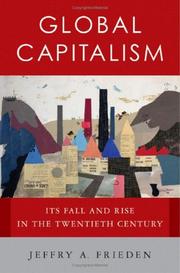
Frieden, J.A. (2007) Global Capitalism: The Fall and Rise in the Twentieth Century. London: W.W. Norton and Company Ltd.
Globalisation and The Internet
Below is an extract under Internet in Globalisation: The Key Concepts. (2007)
The ‘World Wide Web’ is what most people understand as the internet, and since its emergence in the mid 1990s it has grown at an unprecedented pace, spawning a system that we can neither control nor conceptualise.
However, the internet’s open architecture has proved problematic even for established industries, as the experience of the music, film and software industries demonstrate. Given the inevitability of media convergence (the collapse of separate media into a single digital medium), the ability to maintain ownership of content has become a prime objective. However, all attempts to centralise or regulate the internet carry the risk of sacrificing the very principle that make it such a unique medium, and so it is likely that it will remain an unpredictable technology for the foreseeable future.
As a global real-time information system, the internet is an integral component of globalisation, and it accelerates many of the trends of a network society. Its decentralisation provides a platform for marginalised groups to disseminate their views, and to challenge the orthodoxy of conventional media. Nevertheless, it should be borne in mind that a large percentage of the worlds population does not have access to this resource, resulting in a very real digital age.
Although this text states that the internets open architecture has proved problematic, and in some industries it may be argued that it is a bad thing and information can quite easily be taken without consent, it has also progressed so many businesses and given ordinary people a chance to share their business or work with the world who would never have been given a change to grow if it wasn’t for the web. There is no doubt about the fact that the internet has become a great way to network and a lot of businesses only exist and remain in business because of it. Most people rely on the internet in day to day life and it plays a large part in our society today. We use it everyday without even giving it a second thought yet, as it states in the extract above, there is still a large percentage of the worlds population that do not have access to it and this should always be kept in mind. Is it a good or bad thing that some parts of the world have no internet access? How would we have progressed the way we have without the internet? How would we network and gain more business? In my opinion, I think the internet is a great thing and although it has it’s flaws, like everything in life, without it a lot of people wouldn’t be where they are today.
Sunday, 29 March 2015
Technology, Globalisation and Economic Performance
'Some authors have claimed that the current process of globalisation is eroding the significance of nations as meaningful subjects of technological change ... Others, on the contrary, have argued that the significance of globalisation has been overemphasised since the bulk of firms' innovative activities are still carried out in their home countries'
D. Archibugi and J. Michie (1997) Technology, Globalisation and Economic Performance, Cambridge University Press, page 2
I feel that technology has developed because of the ability to mix theories and practice with other nations easily due to globalisation allowing access to countries through the means of Tavel or Technology. And even though a firm stays within its own home country does not just mean that this is less globalised due to the workers possibly being from other countries to develop and improve there business/ firm.
Ian Goldin: Navigating our global future
Here is a talk I found of Ian Goldin on TED talks. He is explaining the effects of our growth in technology and skills and how it might or might not effect us in the long run. He is explaining globalization in its different aspects and discussing how we can help our world not suffer as much to all these changes.
I liked this talk as it helped me understand globalization a bit more and helped me understand what certain changes could effect it and the people in the west and non west. Overall its a very good talk and he had some very valid points.
Saturday, 28 March 2015
Published References

C. Lindner (2009) Globalization, Violence and the Visual Culture of Cities, Routledge.
.jpg)
F. Jameson and M. Miyoshi (1998) The Culture of Globalisation, Duke University Press.

S. Edwards and P. Woods (2013) Art and Visual Culture 1850-2010: Modernity to Globalisation, Tate Enterprises Ltd.
Globalisation, Violence and the Visual Culture of Cities
C. Lindner (2009) Globalization, Violence and the Visual Culture of Cities, Routledge.
'...as the following chapters explore, while the globalization of cities certainly has the potential to foster cultural innovation, it too frequently tends towards a homogenization and suppression of difference that can lead to violence in an alarming number of ways'
This quote which I found shows one of the negative points to globalisation as it talks about the globalisation of cities and the repercussions from this globalised status and the violence in which it brings, this brings equalisation into play and could also be used to represent country globalisation, for equal distribution.
'...as the following chapters explore, while the globalization of cities certainly has the potential to foster cultural innovation, it too frequently tends towards a homogenization and suppression of difference that can lead to violence in an alarming number of ways'
This quote which I found shows one of the negative points to globalisation as it talks about the globalisation of cities and the repercussions from this globalised status and the violence in which it brings, this brings equalisation into play and could also be used to represent country globalisation, for equal distribution.
Thursday, 26 March 2015
The Guardian's Opinion
globalisation has helped reduce inequality between countries, but is "adding to inequality within countries, as highly skilled workers benefit from new markets, while low- and medium-skilled workers in the west compete with cheaper workers in emerging countries, or with immigrants at home".
The Guardian points out here that globalisation is not always the good thing that capitalist supporters and big business want you to think. It, in reality, makes the poorer worse off and the rich richer. This has been protested against globally by human rights activists who want to see a fairer system.
Globalisation has added millions, indeed
billions, to the world's workforce.
This I fear is the get out clause
for governments. They can argue that they are making/creating jobs
because figures are more important rather than the quality of the jobs.
There is widespread concern about stagnant,
indeed falling, average real incomes in countries such as the UK. To some
extent this is probably down to globalisation and factor price equalisation –
to put it crudely: competition from cheap labour.
Living standards are indeed falling due to the exportation and out sourcing to countries where average pay is lower so the out going costs for businesses is lower therefore increasing profit margins for them. This is an example of what the first point was making. Sadly it's all about the making of money not the idea of compassion and fairness.
Published Sources

Ritzer, George. The Globalization of Nothing. Pine Forge Press, 2004.

Schirato, Tony, and Jen Webb. Understanding Globalization. London: Sage Publications, 2003.

Turkle, Sherry. Alone Together. Basic Books, 2011.
The Meaning of Globalisation
Here is an extract from Globalisation: The Key Concepts. (2007)
In academic circles, there are many definitions of and approaches to globalisation simply because it is not a field of study that is restricted to any one discipline. Globalisation scholars belong to fields as diverse as cultural studies, sociology, economics, international relations, political theory, art and linguistics. This cross-disciplinary nature of globalisation is perhaps one of its defining features. Hence, it is a field that borrow a significant number of terms and concepts from existing lexicons. The result is that what globalisation means is always in dispute. In the end, globalisation concerns a field of inquiry defined more by the questions it asks and its object of study: the world as a whole and parts of it in relation to this whole.
Among nonacademics, however, recent research indicated something of a consensus as to the meaning of globalisation (Garrett, Evens and Williams, forthcoming.) When asked what ‘globalisation’ made them think of, respondents tended to focus on economic issues including capitalism, money, big business, and the expansion of large corporations. The prominence of multinational corporations as increasingly present and powerful players in contemporary society was often noted.
This piece of text was brought to my attention by the way in which it defines ‘globalisation’. The text talks of people linking it more to capitalism, money, big business, and the expansion of large corporations, thus mentioning large businesses a lot. Although globalisation has helped large companies grow even larger, it has also helped a lot of small businesses start up and all of the businesses we know today as being ‘multinational corporations’ had to start somewhere along the line. The extract notes how the larger corporations are increasingly present in contemporary society, but I think that smaller companies also play a huge part in our society, whether people see it or not, and without them we would definitely notice a difference. I would like to look further into how globalisation has helped businesses grow, in particular smaller businesses who don’t necessarily have any intentions to become huge, but to expand enough to make a decent living.
Wednesday, 25 March 2015
Capitalism
Link to gif
This gif is showing you the effects of Capitalism, Is it showing how it can spread and effect, or even help people. Is this good for the globe? Will it help people or just pull people further from each other, a nice rendition of what capitalism can do in Globalisation.
This gif is showing you the effects of Capitalism, Is it showing how it can spread and effect, or even help people. Is this good for the globe? Will it help people or just pull people further from each other, a nice rendition of what capitalism can do in Globalisation.
Tuesday, 24 March 2015
References

Mooney, A. and Evans, B. (2007) Globalization: The Key Concepts. London: Routledge.

Tawadros, G. (2004) Changing States: contemporary art and ideas in an era of globalisation. London: Institution of International Visual Arts.
Manifesto
Globalisation describes the process of unifying the world through various methods; it is essentially bringing the world closer together. One of the ways in which this is achieved is the exchange of goods internationally as well as the investment into other nations resources. A downside to this is the prolonging of third world poverty for first world gains, a reversed Robin Hood dynamic.
The communication of ideas and policies shared through the advancement of technology and the relaxation of national border control aids the growth and development of Globalisation. An early example of Globalisation is the exportation of belief in the form of religion, which has made people all around the world think and believe in these teachings.
The development of technology has greatly aided the advancement of globalisation. Communication devices such as mobile phones, email and even dating back to telegraphs have influenced how our countries have established hugely. Social media is also another factor, meaning that we can communicate with people around the world and other nations, just as well as we could communicate with someone in the same country.
Travel has been developed hugely which has accelerated our relations with other countries. The travel and tourism industry is a massive source of income in most countries, for example when we look at how heavily London relied on tourism for income in the summer of 2012, and without the open borders and good communication between countries it wouldn’t be possible.
However, globalisation is not always a good thing. One of the negatives is that with the exchanging of goods etc becoming easier, the passing on of human, animal and plant diseases are also much easier. Another problem that can arise with globalisation is that while most countries are thriving, others are getting poorer due to their lack of technology and education. These are only some of the negatives of globalisation, this is only scratching the surface. The implications of globalisation whether good or bad are huge and it is these we will study and review.
Travel has been developed hugely which has accelerated our relations with other countries. The travel and tourism industry is a massive source of income in most countries, for example when we look at how heavily London relied on tourism for income in the summer of 2012, and without the open borders and good communication between countries it wouldn’t be possible.
However, globalisation is not always a good thing. One of the negatives is that with the exchanging of goods etc becoming easier, the passing on of human, animal and plant diseases are also much easier. Another problem that can arise with globalisation is that while most countries are thriving, others are getting poorer due to their lack of technology and education. These are only some of the negatives of globalisation, this is only scratching the surface. The implications of globalisation whether good or bad are huge and it is these we will study and review.
Tuesday, 17 March 2015
Subscribe to:
Comments (Atom)